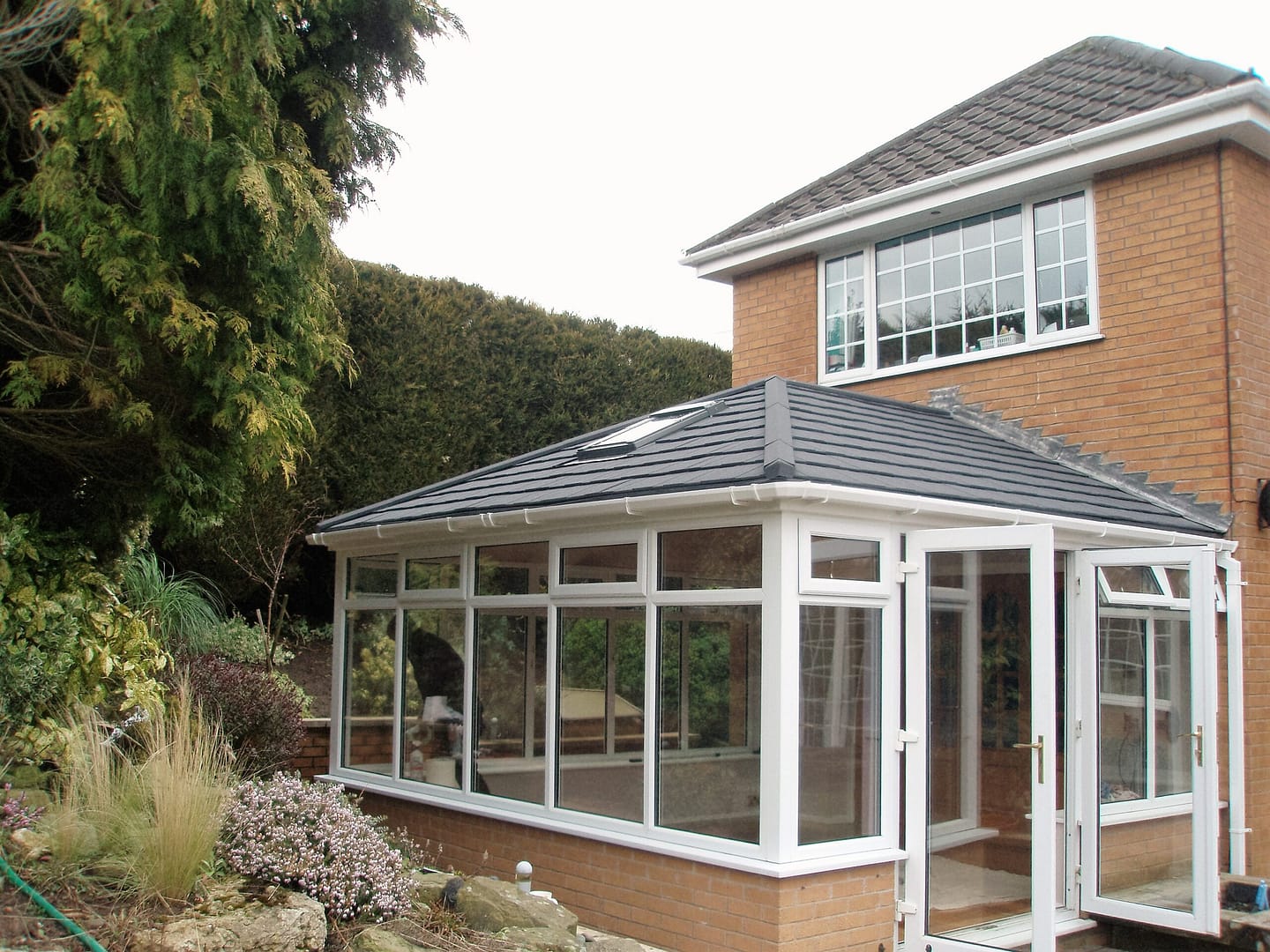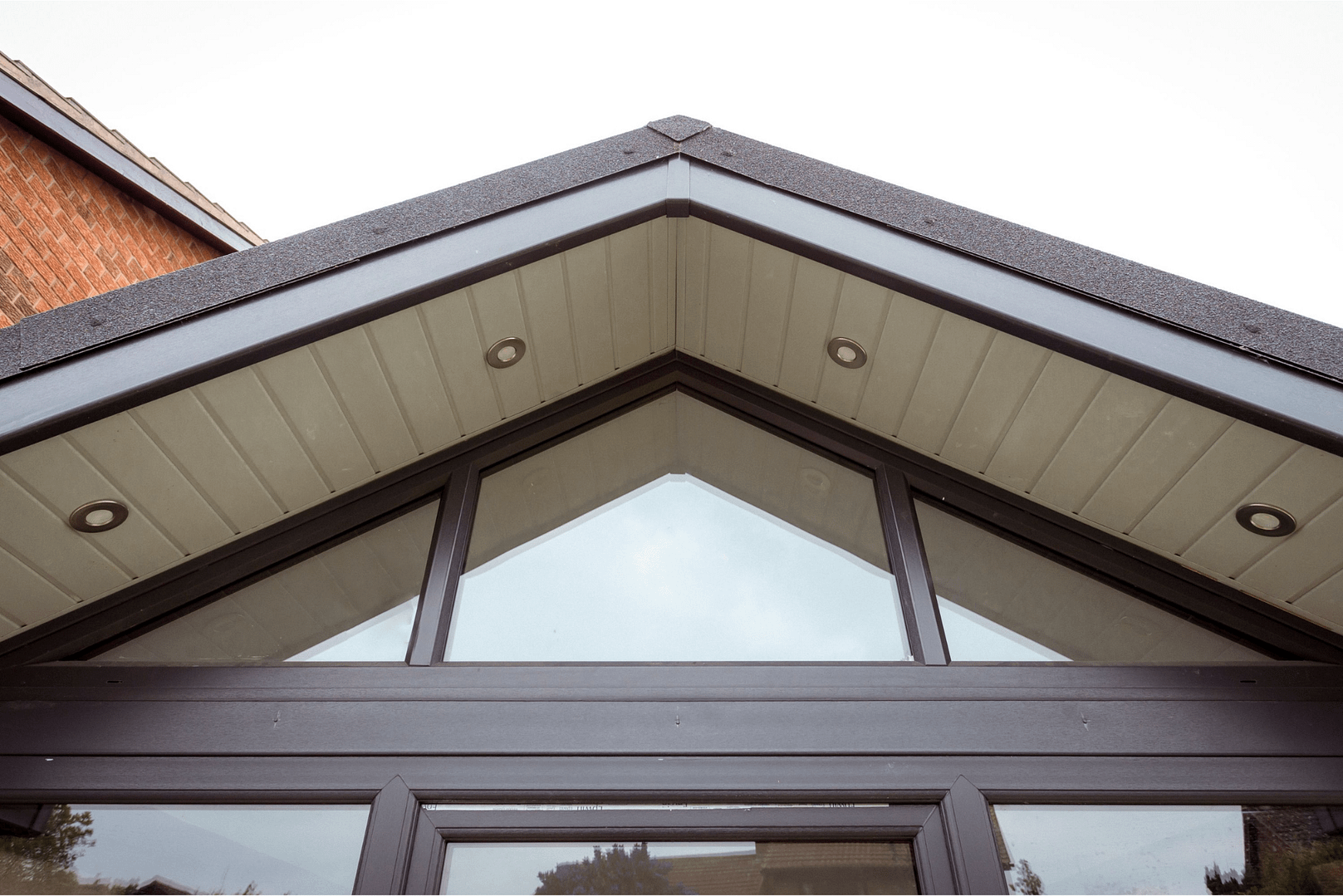

One of the most common questions we hear is, “Do I need planning permission before I build a conservatory?”
Many homeowners in England do not need planning permission for a conservatory, provided the project meets the rules for permitted development.
However, this depends on several factors, such as the height and depth of the conservatory, its distance from neighbouring boundaries, and whether your property is listed or located in a conservation area can all affect what’s permitted.
In this guide, our conservatory experts at Celestial Windows will explain:
- What permitted development rights mean for conservatory projects
- When planning permission may still be required
- The rules around size, height, boundaries, and location
- How previous extensions can affect what you’re allowed to build
- The difference between planning permission and Building Regulations
- When a Lawful Development Certificate might be worth considering
- The local restrictions that can apply to listed buildings and conservation areas
Do You Need Planning Permission for a Conservatory?
No, many conservatories in England do not need planning permission if they meet all the requirements for permitted development rights. However, every condition must be satisfied, including rules relating to size, height, location, boundaries, previous extensions, and any local restrictions that apply to the property.
Conservatories follow the same planning rules as other types of house extensions. This means there is no separate set of regulations simply because the structure is a conservatory. Whether planning permission is needed depends on the individual property and the details of the proposed build.
It’s important not to assume that dimensions alone provide the answer. A conservatory that falls within the maximum size limits may still require permission if:
- The property is a flat or maisonette
- Previous extensions have already used some permitted development allowances
- The home is in a conservation area
- The property is listed
- Local planning restrictions or Article 4 Directions apply
In most cases, houses benefit from permitted development rights, but flats and maisonettes do not. This means homeowners living in converted or purpose-built flats will usually need to apply for planning permission before carrying out similar work.
Even when a conservatory appears to meet all the rules, obtaining formal confirmation through a Lawful Development Certificate can provide valuable peace of mind. This creates a clear record that the work was lawful at the time it was completed, which can be helpful if you sell your property in the future.
The key takeaway is simple: a conservatory may not need planning permission, but it should never be assumed automatically. Every project should be assessed against the relevant rules before work begins.
What Are the Permitted Development Rules for Conservatories?
Many conservatories can be built under permitted development rights, but only if all of the relevant conditions are met. The rules apply to conservatories in the same way they apply to other house extensions, so it’s important to look at the whole project rather than focusing on size alone.
What are the permitted development rules for a conservatory?
- The property must normally be a house.
Flats, maisonettes, and converted buildings do not usually benefit from the same permitted development rights. - The conservatory must not extend forward of the principal elevation facing a highway.
This means you cannot normally build in front of the main face of the house that looks onto a road. - Rear extension limits still apply.
The permitted depth of a rear conservatory depends on the type of house and whether larger home extension rules or prior approval procedures are relevant. - Side conservatories have separate restrictions.
Width, height, and position all need to be considered, particularly on corner plots. - Maximum height and eaves limits apply.
Conservatories must remain within the permitted height requirements, and stricter eaves limits may apply close to neighbouring boundaries. - Extensions and outbuildings must not cover more than 50% of the land around the original house.
The term original house refers to the property as it stood on 1 July 1948, or when it was first built if newer. - Previous extensions count towards your allowance.
Existing conservatories, extensions, garages, and other structures may reduce what can be added under permitted development. - Permitted development rights may have been removed or restricted.
Some properties are affected by planning conditions, Article 4 Directions, or local restrictions. - Listed buildings and designated areas require additional checks.
Homes in conservation areas or other protected locations may be subject to different requirements.
The safest approach is to review the latest Planning Portal guidance or speak with your local planning authority before work begins.
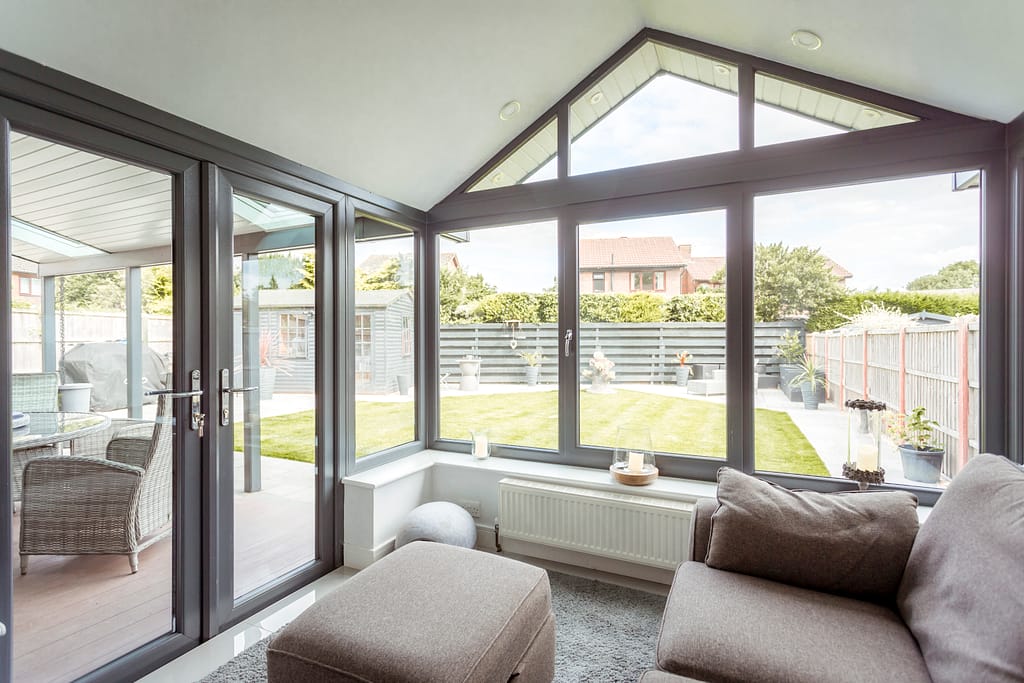
How Does the Position of the Conservatory Affect Planning Permission?
The position of your conservatory can have a major impact on whether planning permission is required. Rear, side, and front conservatories are treated differently under permitted development rules, so location matters just as much as size.
Rear Conservatories
These are often the most likely to qualify under permitted development rights. However, the rules around depth, height, and proximity to neighbouring boundaries still apply.
If your property has already been extended at the rear, this may reduce the remaining allowance available. Larger rear conservatories may also fall under the prior approval process rather than standard permitted development rules.
Side Conservatories
Side conservatories are subject to stricter controls, particularly regarding width and height. They must usually remain within the relevant side extension limits and should not dominate the appearance of the original house.
Corner properties need extra attention, especially where a side elevation faces a highway, as additional planning considerations may apply.
Front Conservatories
Conservatories built in front of the principal elevation are much more likely to require planning permission. This is particularly true where the extension would face a public road or highway.
Local planning authorities may also consider the visual impact of a front conservatory on the surrounding area, so these projects often require more detailed assessment before work can begin.
Do Previous Extensions Affect Permitted Development Rights?
Yes, previous extensions can affect whether your conservatory qualifies under permitted development rights. This is one of the most commonly misunderstood parts of the planning process.
The rules are based on the original house, not the property as it exists today. In most cases, the original house means the building as it stood on 1 July 1948, or when it was first built if it was constructed after that date.
This means that extensions added by previous owners still count towards the available allowance. A new conservatory cannot be assessed in isolation.
For example:
- An existing rear extension may reduce the amount of additional depth you can add.
- A side extension could affect what is permitted on another elevation.
- Garages, sheds, and other outbuildings may contribute towards the rule that limits development to 50% of the land surrounding the original house.
Many homeowners assume that only the changes they have personally made are relevant, but this is not the case. The planning history of the entire property matters.
If you’re unsure, historic plans, title documents, or records held by your local planning authority can help clarify what work has already been carried out. Taking the time to check these details early can prevent costly mistakes later in the project.
When Is Planning Permission More Likely to Be Required?
| Situation | Planning Permission More Likely? | Why |
| Flat or maisonette | Yes | These properties do not usually benefit from the same permitted development rights as houses. |
| Conservatory at the front of the property | Yes | Extensions forward of the principal elevation often require permission, especially if they face a highway. |
| Proposed depth exceeds permitted development limits | Yes | Larger extensions may need full planning permission or a separate prior approval process. |
| Proposed height exceeds the relevant limits | Yes | Height and eaves restrictions still apply under permitted development rules. |
| Close to a boundary with high eaves | Yes | Additional restrictions apply where extensions are near neighbouring properties. |
| Previous extensions have used the available allowance | Yes | Existing work reduces the remaining permitted development rights for the property. |
| Permitted development rights have been removed | Yes | Planning conditions or Article 4 Directions may restrict what can be built without permission. |
| Listed building | Yes | Listed properties are subject to additional controls and often require formal consent. |
| Conservation area or designated location | Possibly | The specific proposal and local restrictions determine whether permission is needed. |
| Significant change to the appearance of the property | Possibly | Local planning authorities may consider the visual impact of the design. |
It is important to remember that being in a conservation area does not automatically mean planning permission is always required. The exact rules depend on the type of work being proposed and any local controls that apply.
Similarly, an Article 4 Direction may remove certain permitted development rights altogether, meaning even relatively modest projects need formal approval.
If any of these situations apply to your home, it is worth checking with your local planning authority or seeking professional advice before moving forward with your conservatory plans.
Do Detached, Semi-Detached and Terraced Houses Have Different Rules?
The same permitted development framework generally applies to detached, semi-detached, and terraced houses, but the type of property can still influence whether a conservatory needs planning permission.
Does a semi-detached or terraced house need planning permission for a conservatory?
Not necessarily. Many conservatories on semi-detached and terraced houses can be built under permitted development rights, provided all the relevant rules and conditions are met. The size, position, height, boundaries, and previous extensions matter more than the property type itself.
There are, however, some important differences to consider.
Detached houses may benefit from different rear extension depth limits compared with other types of homes. Larger rear additions could also fall within the prior approval process rather than standard permitted development rules.
Terraced and semi-detached properties often sit on narrower plots, which means boundary distances become more important. The closer a conservatory is to a neighbouring property, the more carefully eaves heights and overall dimensions need to be considered.
Previous extensions can also reduce the available allowance. A side extension added years ago could affect what is possible today, regardless of whether the property is detached, semi-detached, or terraced.
The key point is that the actual dimensions and location of the conservatory matter far more than the label attached to the property itself. Every project should be assessed on its own merits.
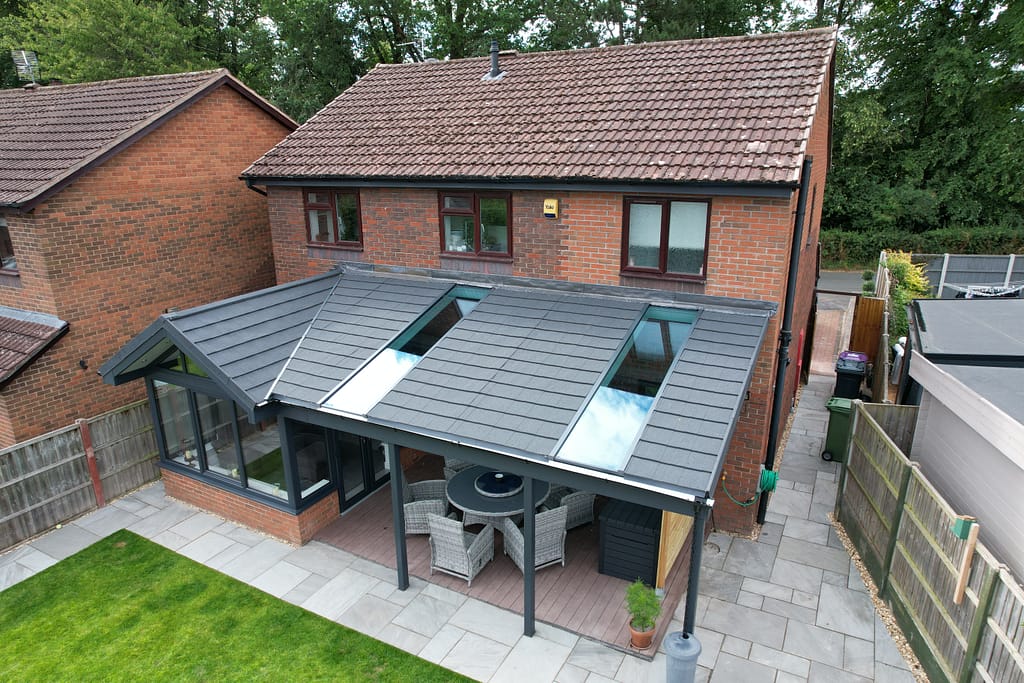
What Is Prior Approval for a Larger Conservatory?
In some cases, a larger rear conservatory may be possible through the prior approval process rather than a standard planning application.
Prior approval is different from normal permitted development rights. Although the extension may still qualify under a specific scheme, the local planning authority must review certain aspects of the proposal before work can begin.
As part of the process:
- Neighbouring properties may be formally notified
- Neighbours can raise concerns or objections
- The proposal must meet all relevant limits and conditions
- Approval must be obtained before construction starts
Not every conservatory or property will qualify for prior approval, and the process does not guarantee that a project will be accepted. The exact requirements should always be checked against the latest Planning Portal guidance and local authority advice before proceeding.
What Is a Lawful Development Certificate?
A Lawful Development Certificate (LDC) is an official document that confirms a proposed conservatory complies with planning law and can be built without a full planning application.
It is important to understand that an LDC is not the same as planning permission. Many homeowners are not legally required to obtain one, but it can provide valuable peace of mind and clear documentary evidence that the work was lawful when it was carried out.
An LDC can be particularly useful when selling your property in the future, as buyers and solicitors may ask for proof that the conservatory was built correctly and within the permitted development rules.
The application must accurately reflect the design that will actually be constructed. If significant changes are made after the certificate is issued, it may no longer apply to the finished project.
Ultimately, the decision rests with your local planning authority, which will assess whether the proposed development meets the relevant legal requirements. For many homeowners, an LDC is a sensible way to gain certainty before work begins.
Planning Permission vs Building Regulations
Planning permission and Building Regulations are two separate approval systems, and it is important not to confuse them. A conservatory may qualify under permitted development rights and avoid the need for planning permission, but Building Regulations could still apply to certain parts of the project.
Some conservatories are exempt from full Building Regulations requirements, provided they meet specific conditions. For example, they are typically separated from the main house by external-quality doors or windows and have independent heating systems.
However, not every project falls into this category.
Open-plan conservatories, where the dividing doors have been removed, often require a greater level of assessment because the extension becomes more closely integrated with the existing home. Structural alterations to create wider openings may also require approval.
Other elements that still need to comply with relevant standards include:
- Glazing, which must meet current safety requirements
- Electrical installations, which should be carried out in accordance with Building Regulations
- Drainage changes, if existing pipes, manholes, or systems are affected by the new conservatory
This is why it is important to consider the whole project rather than focusing solely on planning permission.
At Celestial Windows, we help homeowners understand these requirements as part of the conservatory design and installation process. If you’re considering a new conservatory, our team can guide you through the practical considerations and help ensure your project is planned correctly from the outset.
What Happens If You Build Without the Required Permission?
Building a conservatory without the necessary permission does not automatically mean enforcement action will follow, but it can create complications later on. Depending on the circumstances, you may need to submit a retrospective planning application or make changes to the design to bring it into compliance.
In some cases, unauthorised work may need to be altered or removed. It can also cause delays when selling your home, as solicitors, lenders, and buyers often request evidence that the extension was built lawfully. The safest approach is always to check the planning position before work begins.
How to Check Whether Your Conservatory Needs Planning Permission
If you’re unsure whether your conservatory requires planning permission, follow these simple steps:
- Confirm that the property is a house rather than a flat or maisonette.
- Identify the principal, rear, and side elevations of the property.
- Review any previous extensions or outbuildings.
- Measure the proposed depth of the conservatory.
- Check the eaves height and overall height.
- Confirm the distance from neighbouring boundaries.
- Assess whether extensions already cover more than 50% of the land around the original house.
- Check if permitted development rights have been removed or restricted.
- Review whether the property is listed or within a conservation area.
- Contact your local planning authority if anything is unclear.
- Consider applying for a Lawful Development Certificate for additional peace of mind.
- Finalise the design before construction begins.
Online checklists are helpful, but they should not be the only source of information where a property has unusual features, previous alterations, or local restrictions.
Conservatory Planning Advice in Middlesbrough and Teesside
At Celestial Windows, we design and install bespoke conservatories for homeowners across Middlesbrough, Stockton-on-Tees, Redcar, and the wider Teesside area. One of the most important parts of any project is getting the design right from the beginning.
Early decisions about size, roof height, positioning, and boundary distances can all influence whether planning permission is required. The history of the property and any previous extensions should also be considered before finalising the plans.
Our team can help you shape a practical conservatory design that works for your home and your goals. However, formal planning decisions always remain with the relevant local planning authority.
If you’re considering a new conservatory in Billingham, Yarm, Hartlepool, or anywhere across Teesside, it’s worth discussing your ideas before committing to specific dimensions or roof styles. A little planning at the start can help avoid problems later in the process. Contact us today